The short seller that flagged Nvidia's 'China problem' six months early
Culper Research's 40-page report was mocked when it landed in May. It called Jensen Huang's ties to a Megaspeed executive “uncomfortably close” and traced billions in unexplained money.

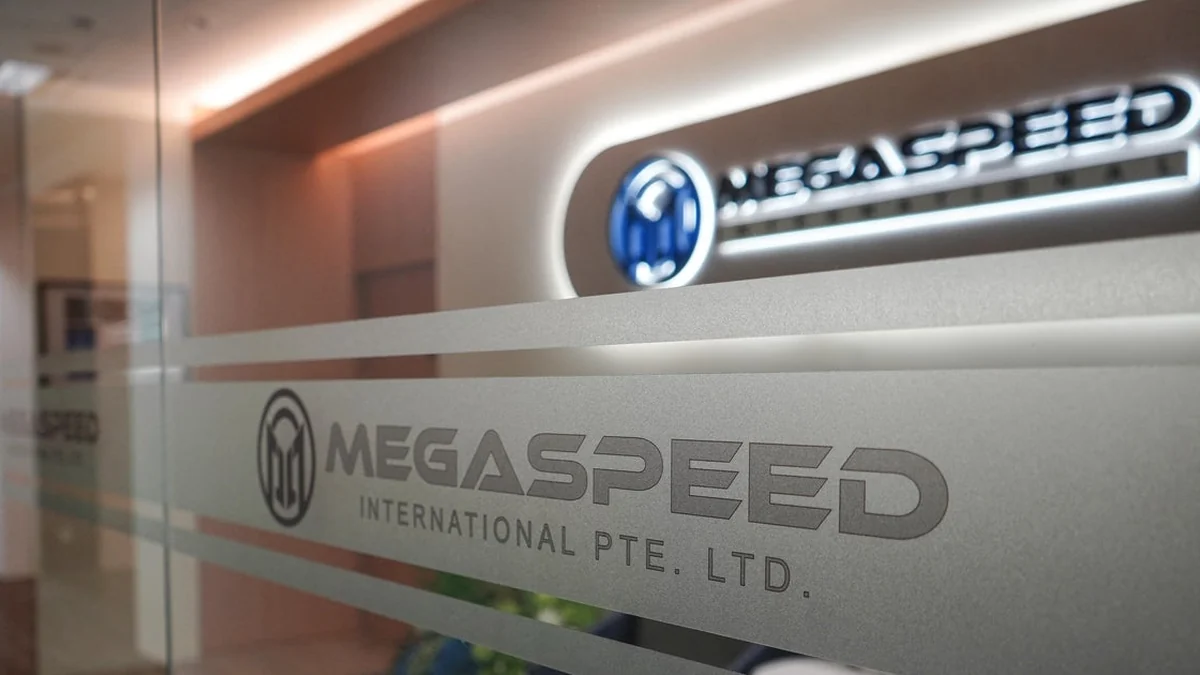
On May 13, 2026, Culper Research, a New York short seller run by Christian Lamarco, published “NVIDIA (NVDA): The China Problem.” The 40-page report argued that a meaningful slice of Nvidia's business was still reaching China despite U.S. export controls, and it put a Singapore company called Megaspeed at the center of that claim. Culper disclosed that it was betting against Nvidia's stock, meaning it profits if the shares fall.
“We believe Nvidia has a significant China problem.” Culper Research, May 13
What the report alleged
- China exposure. Culper said “over 20%” of Nvidia's fiscal 2026 compute revenue remained China-driven through illegal GPU diversion and Southeast Asian intermediaries. Nvidia says its China business went to zero after the April 2025 U.S. restrictions.
- Megaspeed's balance sheet. The company had “relatively few assets at year-end 2023,” about $33 million, then reported $3.0 billion a year later, driven by $2.9 billion in “refundable deposits received” from a source it did not name.
- Alibaba money. Megaspeed's Malaysian affiliate Speedmatrix pledged its assets in June 2024 to Apex Enterprise Solutions (Singapore), which Culper says Singapore filings show is owned by Alibaba. The Financial Times later reported documents showing Alibaba lent money to Megaspeed through subsidiaries.
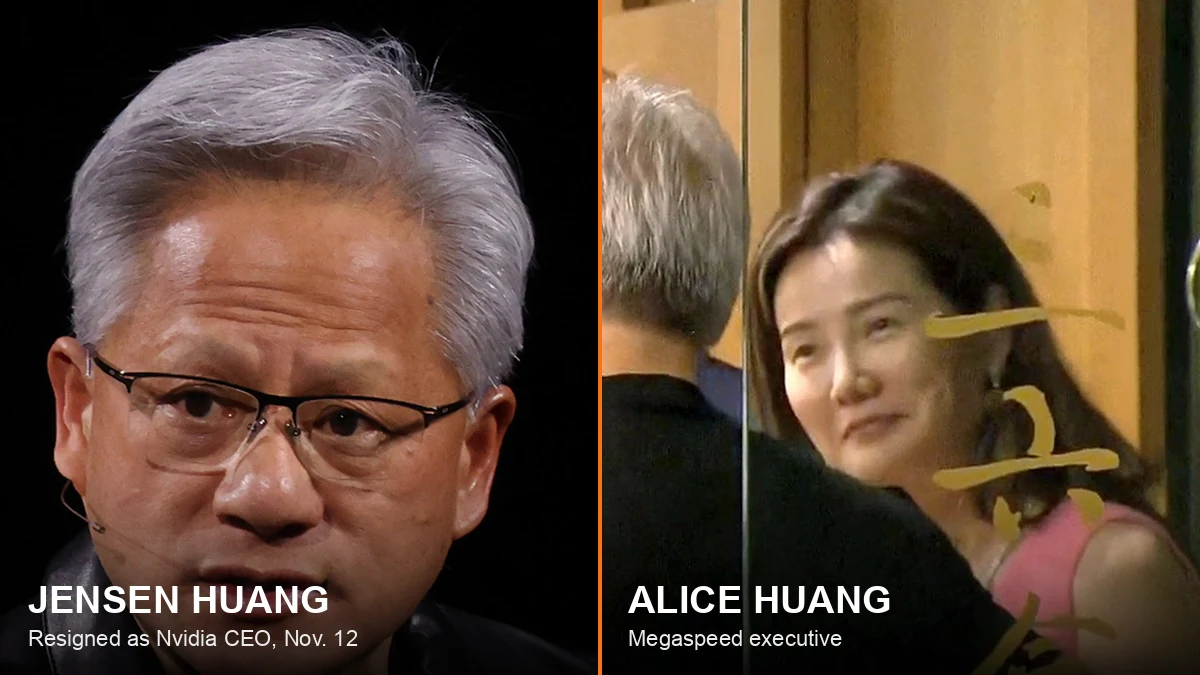
- The relationship. Lamarco wrote that Jensen Huang appeared to have an “uncomfortably close relationship” with Alice Huang, a Megaspeed executive also known as Huang Le, and included photos and video stills of the two at events together. The report did not claim a romance.
The research drew on interviews with employees of Chinese companies, Singaporean and Malaysian corporate filings, and social media posts.
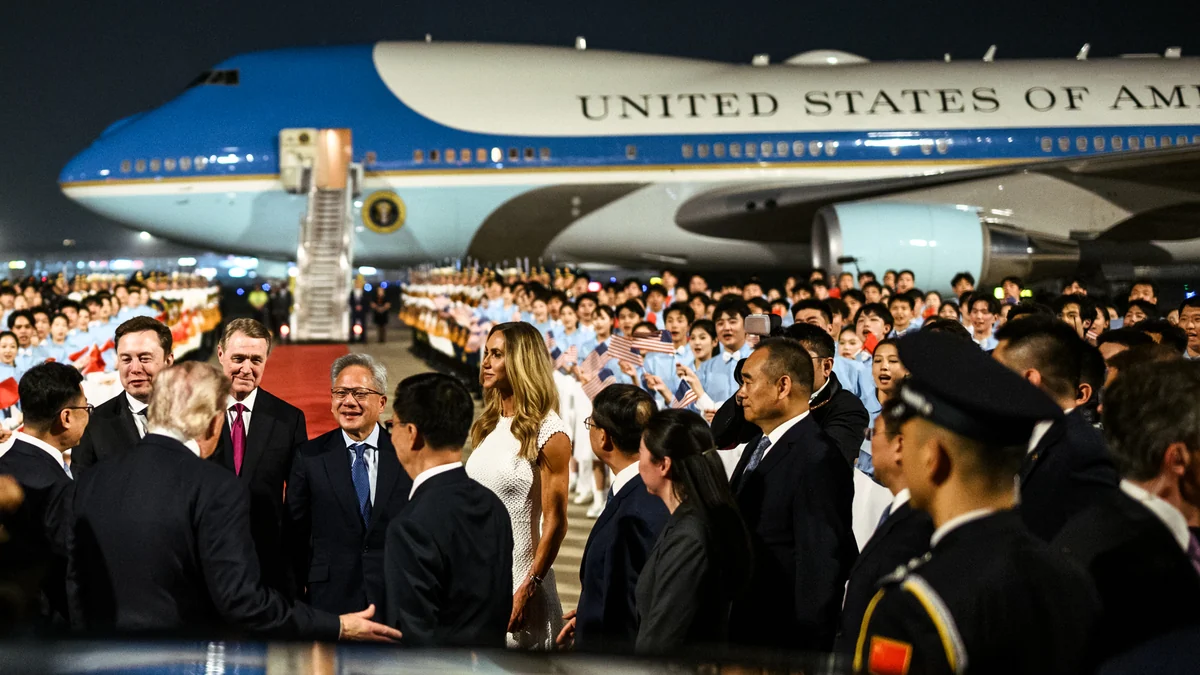
The same week, Air Force One
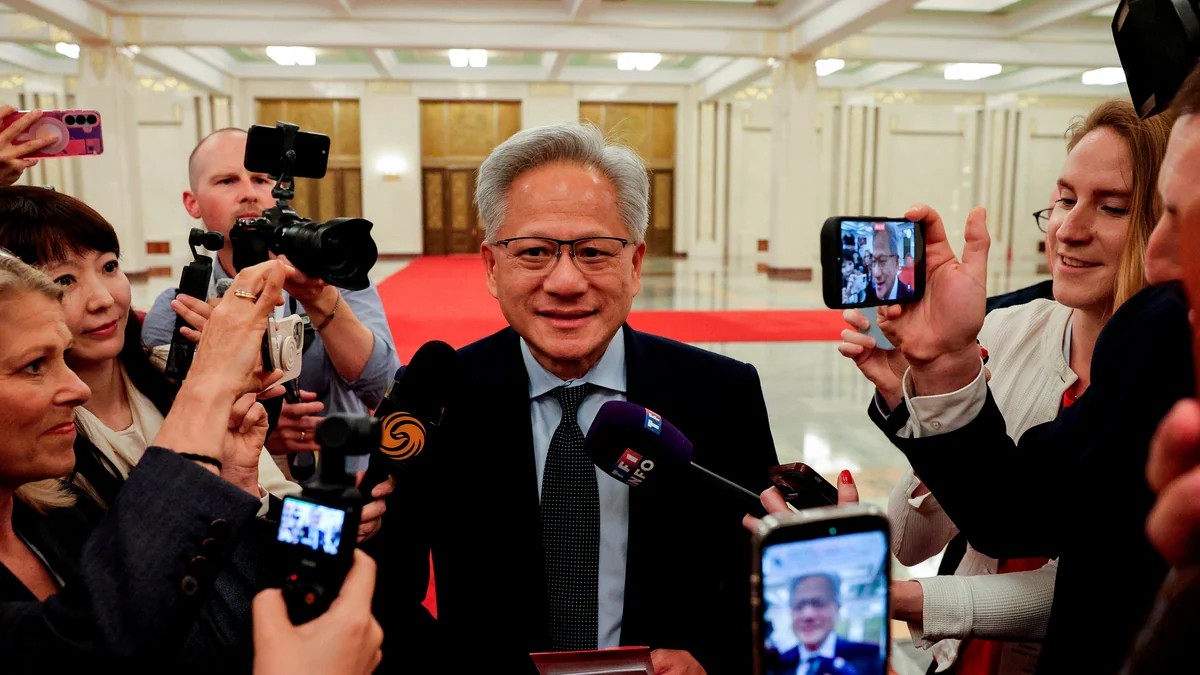
Days after the report, Huang joined President Trump's trip to Beijing, boarding Air Force One during a refueling stop in Alaska after initially being left off the delegation. The New York Times later reported that Secretary of State Marco Rubio briefed Trump on intelligence about Huang's ties to Alice Huang around that trip. Trump says he did not know about the relationship when he went to Beijing, and the White House disputes the Times account.
From mocked to vindicated
Nvidia traded at $225.83 the day the report came out. Through Tuesday's close this week it was down 25%, CBS News calculated, before Thursday's resignation news pushed it lower still.
“Everyone was just mocking us, and now everyone is singing our praises.” Christian Lamarco, to The New York Times
On Nov. 5, as the story broke open, Culper posted: “We wrote about this in May.”
The report never alleged espionage or an affair. Those came from the Times' reporting on a classified U.S. memo and from Huang's own Nov. 8 admission to staff. The trigger for his exit, in other words, was not in the short seller's report at all, even if the company at its center was.
Sources
- Culper Research: NVIDIA (NVDA), The China Problem (May 13, 2026)
- CBS News: Nvidia short-seller warned in May of CEO Jensen Huang's ties to suspected Chinese spy
- TechCrunch: A short seller flagged Nvidia CEO's ties to a suspected Chinese spy six months before the scandal
- Fox Business: Short seller flagged Jensen Huang's ties to alleged Chinese spy months ago
- Philadelphia Inquirer: Trump was told on China trip about Huang's relationship, NYT reports
- Fireship, “Jensen Huang just pulled out of Nvidia...” (The Code Report, Nov. 12, 2026)